
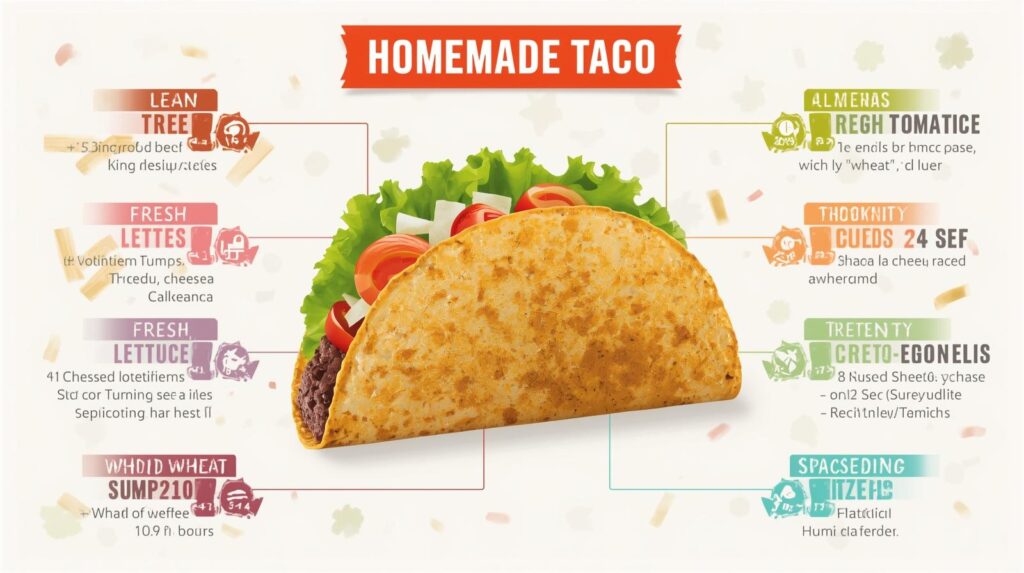
Tacos are one of those meals that fit just about any occasion — quick family dinners, healthy meal prep, or weekend comfort food. But when you make them at home, you gain full control over what goes inside, which means you can make your tacos not just delicious but nutrient-packed too.
In this guide, we’ll break down the complete homemade taco nutrition, answer the most common questions about calories and health, and show how to make tacos that fuel your body right.
🧮 1. How Many Calories Are in a Homemade Taco?
The calorie count in a homemade taco depends on your ingredients, portion size, and cooking style.
Here’s a general estimate for a classic homemade beef taco (one taco):
| Ingredient | Amount | Calories |
|---|---|---|
| Ground beef (lean, cooked) | 2 oz (56 g) | 140 |
| Corn or flour tortilla | 1 medium | 90–120 |
| Shredded cheese | 1 tbsp | 55 |
| Salsa | 2 tbsp | 10 |
| Lettuce & tomato | ¼ cup | 5 |
| Avocado or guacamole | 1 tbsp | 25 |
➡️ Total: Approximately 325–350 calories per taco.
If you’re using chicken or turkey instead of beef, the calorie count can drop to around 250–280 per taco. Vegetarian tacos made with beans or lentils often stay in the 220–260 range.
🥗 2. What Is the Nutritional Value of a Taco?
A well-balanced taco includes protein, fiber, healthy fats, and a mix of vitamins and minerals. Let’s look at the typical nutrition breakdown of a homemade taco with lean beef and veggies:
| Nutrient | Average Amount per Taco | Benefit |
|---|---|---|
| Calories | 300–350 kcal | Moderate energy |
| Protein | 18–22 g | Muscle repair & growth |
| Carbohydrates | 20–25 g | Energy source |
| Fat | 14–18 g | Supports hormones & satiety |
| Fiber | 3–5 g | Aids digestion |
| Sodium | 350–450 mg | Electrolyte balance (limit for low-sodium diets) |
Homemade tacos can also deliver vitamin A, vitamin C, calcium, and iron, depending on your toppings. Using fresh vegetables and whole-grain tortillas significantly boosts the nutrition profile.
⚖️ 3. Is Taco an Unhealthy Food?
Not at all — tacos are only as unhealthy as the ingredients you use.
Fast-food tacos are often high in saturated fat, sodium, and refined carbs. But homemade tacos can easily fit into a healthy diet if you choose smart ingredients:
✅ Healthy taco choices:
- Use lean meats like ground turkey, chicken breast, or shrimp.
- Swap white tortillas for whole-grain or corn tortillas.
- Load up on fresh vegetables for fiber and antioxidants.
- Use healthy fats such as avocado instead of sour cream.
- Try Greek yogurt as a protein-rich topping instead of cheese overload.
💡 Pro tip: If you want to boost your taco’s protein and keep it clean, try adding a spoon of Orgain Organic Protein + Superfoods Chocolate Protein Powder to your taco sauce or side smoothie. It adds plant-based protein and superfoods without altering the flavor.
With mindful preparation, homemade tacos are a balanced, nutrient-rich meal, not a junk food.
🍽️ 4. How Many Tacos Should a Person Eat?
It depends on your calorie needs, goals, and portion size.
- For light meals or weight management: 2 tacos (around 600–700 calories total).
- For active individuals or athletes: 3–4 tacos (900–1,200 calories).
- For kids or smaller appetites: 1–2 tacos may be enough.
Listen to your body’s hunger cues — tacos are filling, especially when made with fiber-rich beans, vegetables, and whole-grain tortillas.
If you’re meal prepping, aim for a balance of macros per meal:
👉 ~30% protein, 40% carbs, and 30% healthy fats.
📊 5. Homemade Taco Nutrition Calculator
You can calculate your taco’s nutrition easily with a few steps:
- List ingredients and weights (use a kitchen scale).
- Search calorie values on USDA FoodData Central or MyFitnessPal.
- Add them up for total calories, protein, carbs, and fats per taco.
Here’s a quick reference for DIY tracking:
| Ingredient | Serving | Calories | Protein (g) | Carbs (g) | Fat (g) |
|---|---|---|---|---|---|
| Lean ground beef | 2 oz | 140 | 14 | 0 | 9 |
| Whole-wheat tortilla | 1 | 100 | 4 | 18 | 2 |
| Cheese (light) | 1 tbsp | 55 | 3 | 0 | 4 |
| Salsa | 2 tbsp | 10 | 0 | 2 | 0 |
| Lettuce, tomato | ¼ cup | 5 | 0 | 1 | 0 |
| Avocado | 1 tbsp | 25 | 0 | 1 | 2 |
| Total | — | 335 | 21 | 22 | 17 |
For quick online results, try entering these values into a “homemade taco nutrition calculator” in any fitness app or website. You’ll get precise macros based on your ingredients.
🌯 6. How Many Calories in a Homemade Soft Taco?
Soft tacos typically use flour or corn tortillas, which are slightly higher in carbs but lower in fat than fried shells.
Here’s the typical calorie count for one homemade soft taco:
- Flour tortilla (medium): 120 calories
- Lean beef or chicken (2 oz): 140 calories
- Cheese: 55 calories
- Lettuce, tomato, salsa: 15 calories
➡️ Total: About 330 calories per homemade soft taco.
If you’re looking for a lighter version:
- Use corn tortillas (70–80 calories).
- Skip or reduce the cheese.
- Add black beans or grilled vegetables to stay full longer with fewer calories.
🧀 7. How Many Calories in a Beef Taco with Cheese?
A beef taco with cheese is slightly higher in calories due to the fat content in both beef and dairy.
Here’s an approximate breakdown:
| Component | Calories |
|---|---|
| Ground beef (80/20) | 170 |
| Tortilla | 100 |
| Cheese (2 tbsp) | 110 |
| Vegetables & salsa | 15 |
➡️ Total: Around 395–420 calories per taco.
For a leaner version:
- Choose 93% lean ground beef or ground turkey.
- Use reduced-fat cheese or half the portion.
- Grill instead of fry the meat to cut excess oil.
That way, you can reduce total calories by up to 100 per taco without sacrificing flavor.
🥑 Bonus Tips for Making Healthy Homemade Tacos
- Swap sour cream for Greek yogurt for added protein and probiotics.
- Add fiber with beans, lentils, or brown rice.
- Control sodium by using homemade taco seasoning.
- Boost nutrition by mixing in chopped spinach or kale with lettuce.
- Use healthy fats like avocado oil or olive oil for cooking.
You can also experiment with plant-based taco fillings using tofu, tempeh, or chickpeas — all rich in protein and low in saturated fat.
🌟 Final Thoughts: Homemade Tacos Can Be Both Nutritious and Delicious
Homemade tacos don’t have to be guilty pleasures. With the right ingredients and balanced portions, they can be a complete, wholesome meal that fits into any lifestyle — whether you’re eating for weight loss, muscle gain, or simply flavor.
Remember, tacos are flexible: you control the protein, toppings, and calories. A few mindful swaps can turn your taco night into a nutrition-packed experience.
And if you’re looking for a simple way to boost your protein intake naturally, consider adding a scoop of Orgain Organic Protein + Superfoods Chocolate Protein Powder to your meal plan — an easy way to make healthy eating both tasty and efficient.